Showing posts with label ...e outros sítios. Show all posts

Dec 28, 2015

1 billion people do cocaine every day and probably dont even know it


It is a well known story that the original 1885 formula for Coca Cola was sold as an elixir with it’s main medicinal ingredients being coca leaves and kola nuts, hence the name Coca Cola.

As a child I had an elderly neighbor who has long since passed away that recalled stories about the drink at the turn of the twentieth century where they would have endurance contests where he and other boys would dare each other to drink what he reported as being a much harsher, caustic drink to consume than it is today.

It was less than a decade after it’s arrival in the late 1800′s before a growing concern about the effects of cocaine began to raise issues over the safety of the formula. By the 1920′s the formula had been drastically altered to remove the cocaine properties.

But, what is not as well known is that cocaine was NEVER actually removed from Coca Cola.

As the story goes it was crucial to the right to the name Coca Cola that coca leaves be in the formula or else it would not be an accurate description of it’s contents. Without the key ingredient the right to the trademark name would not maintain.

So the solution to this dilemma comes through an unusual exception made by the Drug Enforcement Agency to allow the import of coca leaves that generally come from Peru and are then shipped to a Stepan Company plant in Maywood, New Jersey. It is the only commercial entity in the U.S. that is legally allowed to import coca leaves. It goes through a process of “de-cocainization” and is sold to Coke, while the active ingredient is used by pharmaceutical companies in various medicines.

However, don’t expect to get a buzz from this small amount of cocaine. The amount of active ingredient left in Coca Cola is reported to be less than one part in 50 million. But, it saves the name of one of the biggest giants in beverages known to humanity.


from nervous spider confidential

Forum


Mar 21, 2013

o tabaco da vida

Mario Quintana
Tennessee Williams
Mark Twain
John Steinbeck
Albert Camus
W. H. Auden
Andre Malraux
 Albert Camus
 Gilles Deleuze
Antoine Saint-Exupéry

Sep 8, 2012

Sep 7, 2012

Fumadores de opio de Jules Boissière


LIBROS

Chez la marchande de pavots


Georges Barbier - Chez la marchande de pavots

"The House of the Poppy Merchant." One of the most influential artists of the Art Deco movement, Georges (or George) Barbier was famed for his prints, theater designs and fashion plates.

Dating from 1920, the height of his career (he died in 1932 at only 50), this notorious opium-den plate shows how hip and decadent Parisian fashionistas sometimes liked to amuse themselves.

by UnklNik

Sep 6, 2012

Aug 4, 2012


quando, daqui a umas horas a manhã vier, branca e fina, saberei eu andar?

conseguirei eu, lembrar-me, de como se põe um pé à frente do outro? sem cair…

Al Berto, in "À procura do vento num jardim d'agosto" ed. autor, 1977

Jul 10, 2012

La Morphiniste de Eugène Grasset


Eugene Samuel Grasset, 'Morphinomane', 1897

vícios

Hunter S. Thompson at the Miami Book Fair International of 1988

"Nem todos estão à vontade com a ideia de que a política é um vício. Mas é.
Eles são viciados e mentem e enganam e roubam como fazem todos os junkies."
Hunter Stockton Thompson

LSD


Jul 8, 2012

A Rosa do Mundo

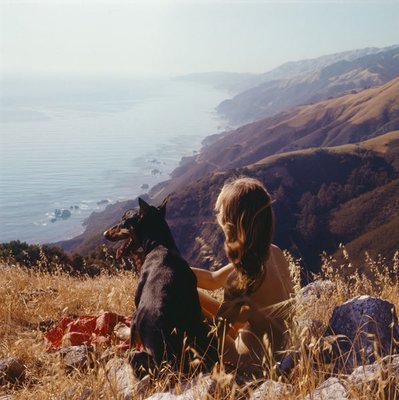
Hunter S. Thompson, Sandy and Agar, Big Sur, California 1961


Ai, doce pensamento meu,
quando me levarás onde te envio eu!

Anónimo, Romancero General (Espanha início sec. XVII)
Rosa do Mundo, Trad. José Bento, Assirio e Alvim


Jul 6, 2012

Rain Dogs


‘In 1967, Anders Petersen started to photograph the late-night regulars (prostitutes, transvestites, drunks, lovers, drug addicts) in a bar in Hamburg, Germany, named Café Lehmitz, and continued that project for three years. 88 b&w photographs in his photobook of the same name was published eight years later in 1978 by Schirmer/Mosel in Germany, and then appeared in France (1979) and Sweden (1982). Café Lehmitz has since become regarded as a seminal book in the history of European photography.

‘The people at the Café Lehmitz had a presence and a sincerity that I myself lacked. It was okay to be desperate, to be tender, to sit all alone or share the company of others. There was a great warmth and tolerance in this destitute setting.’ 

When I looked at Café Lehmitz years afterwards, I suddenly realised it was just like a typical family album. [...] It was a real lesson for me, a young, respectable boy from Sweden. A lesson in how to live.

... ... “After a while, I did not know what I was doing in Café Lehmitz and that is when I felt at home”

- Anders Petersen
- Wikipedia

Café Lehmitz [1967-1970] by Anders Petersen